English
 français
 Deutsch
 Español
 русский
In modern RF and Datacom architectures, "Speed" is the currency. Whether you are designing 800G optical modules, Ku-Band satellite uplinks, or 5G mmWave radios, your system reference clock is no longer idling at 10MHz or 26MHz. Today's chipsets demand high-frequency references—100MHz, 122.88MHz, 156.25MHz, and beyond.
For many engineers, the instinct is to use a cheap low-frequency crystal and multiply it up using a PLL (Phase Locked Loop). But physics exacts a heavy toll for this shortcut: The Phase Noise Penalty.
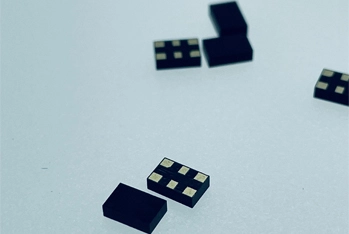
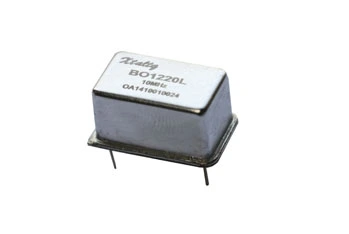
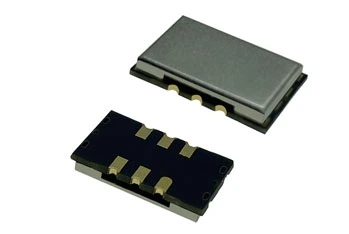
Introducing the XTALTQ 7050 High-Frequency Series: A TCXO designed to deliver pristine signal purity directly at high frequencies, eliminating the need for noisy multiplication stages.

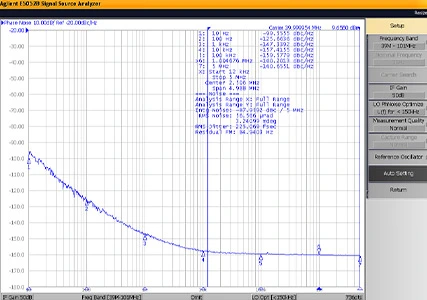
Why not just multiply a standard 10MHz crystal to get 100MHz? Because phase noise scales with frequency multiplication. According to the for, multiplying a signal by 10 (from 10MHz to 100MHz) automatically adds 20dB to your phase noise floor.
This 20dB degradation creates a "fog" in your signal chain, leading to:
· Higher Bit Error Rates (BER) in high-speed data links.
· Reduced Dynamic Range in radar and SDR applications.
· Poor EVM (Error Vector Magnitude) in complex modulation schemes like 256-QAM or 1024-QAM.
The XTALTQ 7050 High-Frequency TCXO solves this by generating the high frequency directly (or via ultra-low noise internal architecture), bypassing the noise penalty of standard external PLLs.
Achieving high frequency usually means thinner, more fragile quartz blanks. However, the 7.0 x 5.0 mm (7050) footprint of the XTALTQ series offers a distinct advantage over miniature packages:
· Thermal Management: High-frequency oscillation generates heat. The larger ceramic package acts as an effective heat sink, ensuring frequency stability is not compromised by self-heating.
· Circuit Isolation: The internal layout allows for better separation between the oscillator stage and the output buffer, minimizing crosstalk and spurious emissions.
· Inverted Mesa Technology: For fundamental high frequencies, we utilize advanced processing techniques that maintain structural integrity even at higher resonance modes.
This component is the "Clean Source" required for next-generation infrastructure:
· 5G mmWave & Microwave Backhaul: Supporting high sampling rates (122.88MHz) required by modern ADCs and DACs.
· High-Resolution Radar: Where close-in phase noise directly impacts the ability to detect slow-moving targets amidst clutter.
· Test Instrumentation: Synthesizers that require a high-frequency purity baseline.
In high-bandwidth systems, your reference clock sets the limit of your performance. Don't let PLL noise be the bottleneck. Start with a clean, high-frequency signal from the source.
The XTALTQ 7050 High-Frequency TCXO gives you the spectral purity you need to push your data rates to the edge.