English
 français
 Deutsch
 Español
 русский

Engineers specifying frequency reference components face a recurring decision: is TCXO stability sufficient, or does the application require the tighter stability that only an OCXO can provide? The answer depends on how much frequency drift the system can tolerate, what temperature range the oscillator will experience, and what tradeoffs in power consumption, package size, and warm-up time are acceptable.
An Oven-Controlled Crystal Oscillator (OCXO) achieves frequency stability in the parts-per-billion (ppb) range by maintaining the crystal at a constant elevated temperature inside a controlled oven. A Temperature-Compensated Crystal Oscillator (TCXO) uses electronic compensation to correct for temperature changes, achieving stability in the parts-per-million (ppm) range. The stability difference — typically two to three orders of magnitude — determines which oscillator type is appropriate for a given application.
XTALTQ offers six ultra-stable OCXO models — the BO1220, BO2020, BO2525, BO2736, BO0907, and BO0914 — covering DIP and SMD packages from 9.0 x 7.0 mm to 36 x 27 mm. This article compares OCXO and TCXO technology, examines when OCXO stability is required, and outlines the specification factors that determine OCXO model selection.
An Oven-Controlled Crystal Oscillator (OCXO) is a precision frequency source that houses a quartz crystal inside a temperature-controlled oven. The oven maintains the crystal at a constant temperature — typically around 85°C, higher than the maximum expected ambient temperature — minimizing the frequency variations that temperature changes cause in the crystal.
The OCXO contains three core elements: the quartz crystal oscillator, a heating element with temperature sensor, and a control circuit that monitors the oven temperature and adjusts the heater to maintain a constant setpoint. By keeping the crystal at a stable temperature regardless of ambient conditions, the OCXO achieves frequency stability that is not possible with compensation circuits alone.
XTALTQ's ultra-stable OCXO models achieve frequency stability ranging from ±3 ppb to ±500 ppb over their operating temperature range — compared to TCXO stability of ±0.1 ppm to ±2.0 ppm. This means an OCXO can be 30 to 300 times more stable than a TCXO, depending on the specific models compared.
Parts-Per-Billion Stability: XTALTQ's OCXO models achieve stability as tight as ±3 ppb, compared to the ±100 ppb (±0.1 ppm) best-case stability of TCXOs. For applications where frequency drift directly impacts measurement accuracy or system performance, this stability difference is the primary reason to select an OCXO.
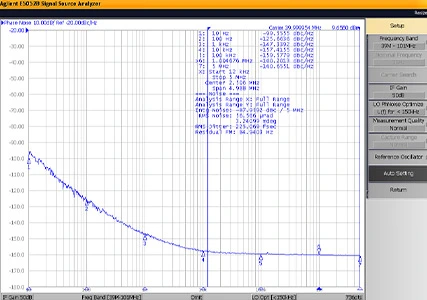
Low Phase Noise: The OCXO models achieve phase noise of -170 dBc/Hz at 1 kHz offset at 10 MHz, and -165 dBc/Hz at 1 kHz offset at 100 MHz. This low phase noise performance benefits applications where signal purity affects system sensitivity, including radar, satellite communication, and precision test equipment.
Wide Frequency Range: The OCXO models cover 10 MHz to 200 MHz, accommodating standard reference frequencies used in telecommunications, instrumentation, and navigation systems.
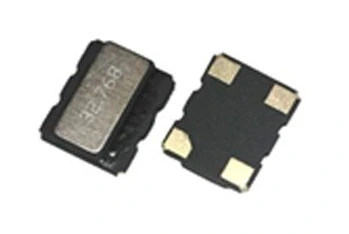
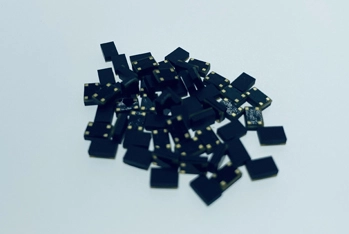
DIP and SMD Package Options: The product line includes DIP packages (BO1220 at 20.2 x 12.6 mm, BO2020 at 20 x 20 mm, BO2525 at 25 x 25 mm, BO2736 at 36 x 27 mm) and SMD packages (BO0907 at 9.0 x 7.0 mm, BO0914 at 14.0 x 9.0 mm), providing options for both through-hole and surface-mount assembly processes.
Fast Warm-Up: Several models in the range are specified with fast warm-up characteristics, reducing the time required for the oscillator to reach stable operation after power-on. This is relevant for systems that cannot tolerate long stabilization periods before becoming operational.
Sine Wave and CMOS Output: The OCXO models offer sine wave or CMOS output options, supporting compatibility with different system interface requirements. Supply voltage options include 5.0V and 12V.
OCXOs are selected when TCXO stability is insufficient for the application's requirements:
· Telecommunications Synchronization: Network synchronization equipment requires frequency references with ppb-level stability to maintain network timing accuracy. The BO1220 and BO2020 models in DIP packages are commonly used in synchronization units where Stratum-level timing compliance is required.
· GPS and GNSS Systems: GPS receivers and GNSS timing modules use OCXO references to maintain precise frequency output for satellite signal acquisition and position calculation. The tighter stability of OCXOs compared to TCXOs reduces timing errors that affect positioning accuracy.
· Scientific Instrumentation: Spectrum analyzers, frequency counters, signal generators, and network analyzers rely on OCXO-grade stability to achieve their specified measurement accuracy. The BO0914 SMD model is suited for precision instrument applications where surface-mount assembly is preferred.
· Satellite and Aerospace: Satellite communication systems and aerospace platforms require frequency references that maintain stability across wide temperature ranges. The BO2525 and BO2736 models, with their larger oven capacity, provide the thermal mass needed for stable operation in varying environmental conditions.
· Reference Clock Distribution: Systems that distribute a precision reference clock to multiple subsystems — data centers, broadcast infrastructure, test racks — use OCXOs as the primary source to ensure that all downstream timing remains within specification.
Required Frequency Stability: Determine the maximum acceptable frequency drift over the operating temperature range. If the application requires stability better than ±0.1 ppm (±100 ppb), an OCXO is necessary. If ±0.1 ppm to ±2.0 ppm is acceptable, a TCXO may suffice and would offer advantages in power consumption, size, and cost.
Power Budget: OCXOs consume significantly more power than TCXOs because the oven heater requires continuous current to maintain temperature. In battery-powered or power-constrained applications, OCXO power consumption may be prohibitive. Evaluate whether the system power budget can accommodate the OCXO's steady-state power consumption and warm-up power surge.
Warm-Up Time Tolerance: OCXOs require time to reach thermal equilibrium after power-on — typically several minutes. TCXOs stabilize in seconds. If the system must be operational immediately after power-on, the OCXO warm-up period may require mitigation strategies such as keep-alive circuits or redundant timing sources.
Package Size Constraints: OCXOs are physically larger than TCXOs due to the oven structure and thermal insulation. The smallest XTALTQ OCXO (BO0907) measures 9.0 x 7.0 mm, while TCXOs are available in packages as small as 2.0 x 1.6 mm. Verify that the selected OCXO package fits the available PCB area.
Phase Noise Requirements: For applications where phase noise impacts system performance — radar, satellite communication, precision instrumentation — verify that the OCXO's phase noise specification at the relevant offset frequencies meets the system requirement. XTALTQ's OCXO models achieve -170 dBc/Hz at 1 kHz offset at 10 MHz.
Operating Temperature Range: Confirm that the OCXO maintains its specified stability over the full operating temperature range of the target application. OCXO oven designs have a maximum ambient temperature above which they cannot maintain the crystal at the setpoint temperature.
XTALTQ provides several practical advantages for engineers and procurement teams specifying OCXO components:
· OCXO Model Coverage: Six ultra-stable OCXO models in DIP and SMD packages covering 10–200 MHz, with stability from ±3 ppb to ±500 ppb, provide options across different application requirements and assembly processes.
· OEM/ODM Support: Custom frequencies, package sizes, and performance parameters can be specified for applications with non-standard requirements, subject to quotation and lead time.
· Specification Matching: XTALTQ's engineering team can review application requirements — stability, phase noise, temperature range, power budget — and recommend the appropriate OCXO model and configuration.
· Full Frequency Control Portfolio: Beyond OCXOs, XTALTQ manufactures TCXOs, VCXOs, SPXOs, crystal resonators, phase-locked modules, VCOs, and GPSDO products. Buyers who need multiple oscillator types can source them from a single supplier.
· Quality Compliance: ISO9001 certified, with products compliant to RoHS and REACH directives for global market requirements.
· Industry Experience: Since 2009, XTALTQ has focused on frequency control product design and manufacturing, with products deployed in GPS, telecommunications, instrumentation, aerospace, and defense applications.
The decision to specify an OCXO rather than a TCXO comes down to one question: does the application require frequency stability in the ppb range, or is ppm-range stability sufficient? If the system — telecommunications synchronization, GPS, scientific instrumentation, satellite communication — cannot tolerate the frequency drift that TCXOs exhibit over temperature, then an OCXO is the appropriate choice. XTALTQ's six ultra-stable OCXO models cover DIP and SMD packages from 9.0 x 7.0 mm to 36 x 27 mm, with frequency stability from ±3 ppb, phase noise down to -170 dBc/Hz, and frequency coverage from 10 to 200 MHz. Send XTALTQ your stability, phase noise, power, and package requirements to receive a matched OCXO model recommendation and quotation.
This is the first one.