English
 français
 Deutsch
 Español
 русский

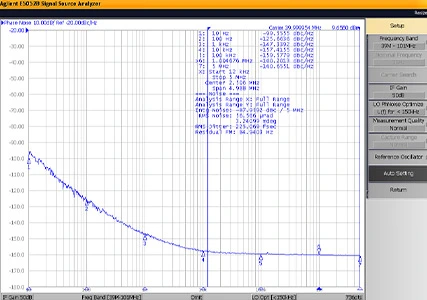
In high-end electronic systems, phase noise has become one of the key parameters influencing system performance. As a core indicator of oscillator performance, phase noise (also known as phase jitter) is defined as the ratio of the single-sideband noise power to the carrier signal power within a 1 Hz bandwidth at a given frequency offset Δf. It essentially reflects the stability of the oscillator's frequency and phase.
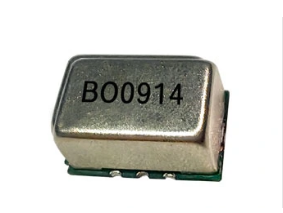
The presence of phase noise can have a profound impact on various high-precision systems, particularly in communication systems, high-performance RF receivers, and precision measurement instruments, where its effect cannot be ignored. To address these challenges, XtalTQ has introduced the ultra low phase noise OCXO, which brings a critical performance breakthrough to high-end instrumentation equipment.
Modern communication equipment places extremely high demands on phase noise specifications. The following table summarizes the impact of phase noise on key communication performance parameters:
| Performance Metric | Problems Caused by Phase Noise |
|---|---|
| EVM (Error Vector Magnitude) | Phase jitter causes constellation diagrams to blur and rotate, leading to increased bit error rate, particularly affecting high-order modulation systems such as 5G NR and Wi-Fi 6/7. |
| ACLR (Adjacent Channel Leakage Ratio) | Phase noise extends the spectrum into adjacent channels, causing leakage, which impacts system compatibility and legality. |
| Receiver Sensitivity | High phase noise in the receiver's local oscillator causes interference signals to mix with useful signal channels, reducing filtering and demodulation efficiency, impairing sensitivity and selectivity. |
Therefore, the phase noise level of the oscillator determines the purity and processing capability of the entire communication link, making it a core focus in communication design.
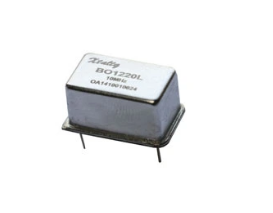
In systems such as radar and satellite communication, where capturing weak signals is crucial, the spectrum purity of the receiver is vital. If the oscillator used in the receiver chain has high phase noise, weak signals may be masked by noise, leading to signal loss or measurement errors. The introduction of ultra low phase noise crystal oscillators can significantly enhance receiver sensitivity, making echo signals clearer and sharper, which greatly improves overall system performance.
In scenarios like industrial automation and medical imaging (e.g., MRI and ultrasound systems), where measurement precision is highly sensitive, the phase stability of the clock signal directly affects system measurement accuracy and control reliability. Even minor phase jitter can cause image blurring or misalignment of control signals, impacting diagnostic results or industrial process yields.
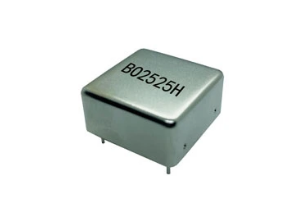
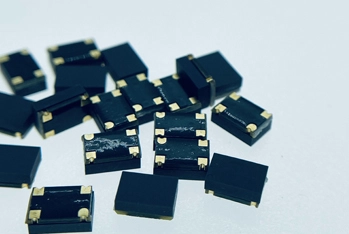
To meet the extreme demands for frequency purity and phase stability in these applications, XtalTQ has launched its ultra low phase noise OCXO series. These temperature-controlled crystal oscillators provide outstanding frequency stability and extremely low phase noise performance through precise temperature compensation and isolation design. The core advantages include:
Excellent frequency accuracy and long-term stability.
Ultra-low phase noise performance, reducing system jitter.
Supports high-bandwidth communication and precision measurement applications.
Stable operation in radar, communication base stations, and high-end medical equipment.
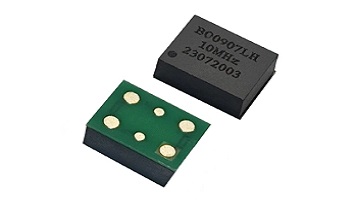
By deploying XtalTQ's ultra low phase noise OCXO in systems, not only can EVM and ACLR performance be significantly improved, but receiver sensitivity and resolution can also be enhanced. This helps to reduce error rates, improve system stability, and enhance data integrity. As communication technologies and high-precision measurement techniques continue to advance, the demands on phase noise performance from frequency sources have never been greater. Thanks to its deep expertise in crystal oscillator technology, XtalTQ's ultra low phase noise OCXO provides reliable, high-performance clock solutions for a wide range of high-end instruments and measurement equipment.