English
 français
 Deutsch
 Español
 русский

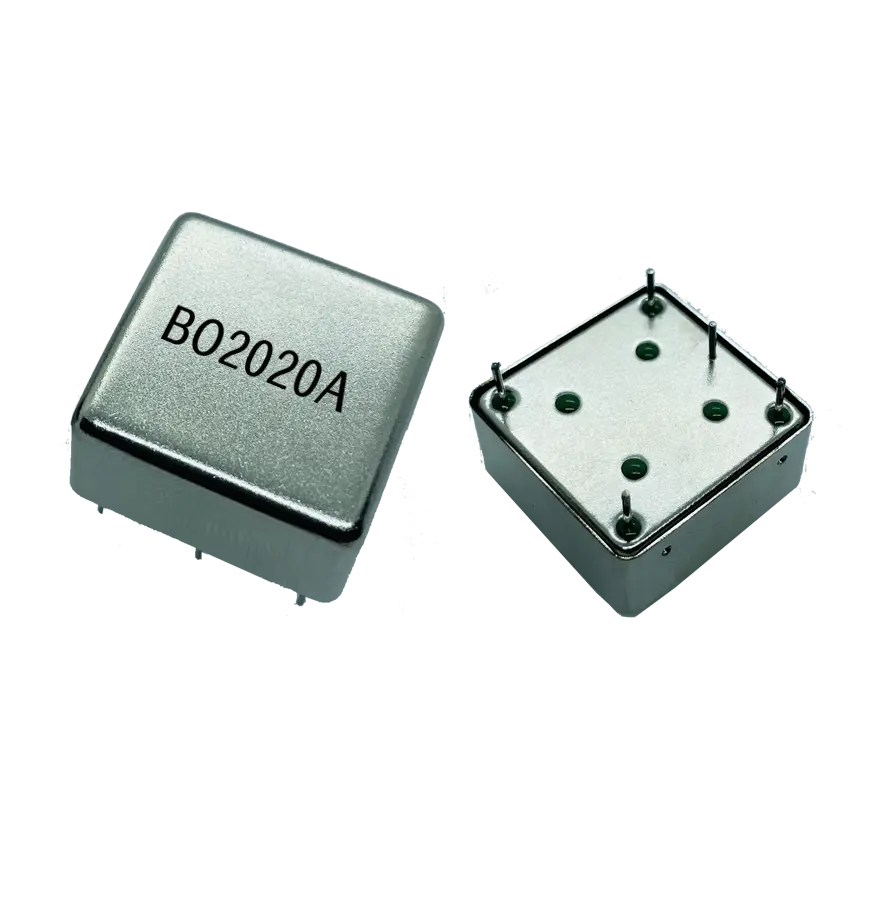
Space missions operate in one of the most challenging environments imaginable. Communication signals travel millions or even billions of kilometers, navigation errors can translate into thousands of kilometers of positional uncertainty, and onboard systems must maintain precise synchronization for years without maintenance. In this environment, timing accuracy is not simply a performance enhancement—it is a mission-critical requirement.
This is why the ultra stable oscillator (USO) has become one of the most important frequency control technologies used in satellites, planetary probes, deep-space exploration vehicles, and scientific spacecraft. From Earth observation satellites to NASA and ESA interplanetary missions, ultra stable oscillators provide the timing precision necessary for navigation, communication, scientific measurements, and autonomous spacecraft operations.
Understanding how these oscillators are used, what performance requirements they must meet, and which technologies are best suited for space applications can help engineers, system integrators, and procurement teams make informed decisions when developing high-reliability aerospace systems.
Unlike terrestrial communication networks, spacecraft often operate at enormous distances from Earth.
For example:
Lunar missions operate approximately 384,000 km away.
Mars missions can exceed 400 million km from Earth.
Deep-space probes may travel billions of kilometers into the solar system.
At these distances, even tiny frequency instabilities can create significant navigation and communication errors.
A highly stable frequency reference directly affects:
Spacecraft positioning accuracy
Doppler tracking precision
Radio science measurements
Deep-space communication reliability
Payload synchronization
Navigation system performance
Data transmission integrity
Without an ultra stable oscillator, many modern space missions would simply not be possible.
An ultra stable oscillator is a high-performance frequency source designed to maintain extremely low frequency drift and exceptionally low phase noise over long periods.
Compared with standard crystal oscillators, USOs provide:
Superior frequency stability
Lower aging rates
Better temperature performance
Reduced phase noise
Improved long-term reliability
Space-qualified ultra stable oscillators are typically designed to survive:
Radiation exposure
Extreme temperature cycling
Vacuum conditions
Launch vibration and shock
Multi-year mission durations
Organizations such as the NASA and the European Space Agency use ultra stable oscillators extensively because spacecraft navigation relies heavily on frequency precision.
Ground stations determine spacecraft velocity by measuring Doppler shifts in radio signals.
Even small oscillator instabilities can introduce velocity measurement errors.
A highly stable onboard reference allows engineers to:
Calculate spacecraft velocity accurately
Refine orbital trajectories
Execute precise course corrections
Support planetary landing operations
Many scientific missions use radio signals to study:
Planetary atmospheres
Gravitational fields
Surface properties
Space weather
The accuracy of these measurements depends directly on oscillator stability.
NASA's Deep Space Network relies on extremely precise timing references to communicate with spacecraft across the solar system.
Ultra stable oscillators help maintain synchronization between spacecraft and Earth-based tracking stations.
Deep-space navigation requires determining a spacecraft's position with extraordinary precision.
The process depends on:
Ground stations transmit signals to the spacecraft.
The spacecraft returns the signal using an onboard frequency reference.
The quality of the returned signal depends heavily on the stability of the onboard oscillator.
Navigation systems measure signal travel times to calculate distance.
Stable oscillators reduce timing uncertainty and improve ranging accuracy.
Future missions increasingly rely on onboard autonomy.
Ultra stable oscillators support:
Autonomous orbit determination
Precision timing systems
Onboard scientific instruments
Navigation algorithms
As spacecraft move farther from Earth, autonomous timing capabilities become increasingly important.
USOs are not limited to deep-space missions.
Many Earth-orbiting satellites depend on highly stable frequency references.
Satellite communications require:
Stable carrier frequencies
Precise modulation
Minimal phase noise
An ultra stable oscillator helps maintain signal integrity and spectral efficiency.
Global navigation systems such as:
GPS
Galileo
BeiDou
GLONASS
all depend on extremely stable timing references.
Although atomic clocks provide primary timing, oscillator subsystems remain critical components throughout the signal chain.
Remote sensing satellites require precise timing for:
Radar imaging
Synthetic Aperture Radar (SAR)
Interferometry
Sensor synchronization
Oscillator performance directly influences measurement quality.
Different mission requirements call for different frequency reference technologies.
Advantages:
Lower power consumption
Compact size
High reliability
Proven heritage
Challenges:
Long-term drift limitations
Advantages:
Excellent short-term stability
Low phase noise
Mature technology
Challenges:
Higher power requirements
Thermal management complexity
Advantages:
Atomic-level stability
Excellent long-term performance
Challenges:
Higher cost
Increased power consumption
Emerging missions increasingly deploy advanced atomic clocks capable of unprecedented timing performance.
These technologies may eventually complement or replace traditional USOs in certain applications.
| Technology | Short-Term Stability | Long-Term Stability | Power Consumption | Space Qualification Complexity |
Crystal Oscillator | Good | Moderate | Low | Low |
OCXO | Excellent | Good | Moderate | Medium |
Rubidium Standard | Very Good | Excellent | Higher | High |
Atomic Clock | Outstanding | Outstanding | High | Very High |
The optimal choice depends on mission objectives, power budgets, and required accuracy.
Space-qualified oscillators must survive conditions rarely encountered in terrestrial applications.
Spacecraft experience:
Total ionizing dose effects
Single event upsets
Solar radiation
Oscillator electronics must be designed for radiation tolerance.
Spacecraft may experience temperature swings exceeding 200°C between sunlit and shadowed conditions.
Frequency stability must be maintained despite these extremes.
Launch vehicles subject components to intense mechanical stress.
Oscillators must withstand:
High acceleration
Vibration loads
Acoustic energy
without degradation.
Some missions operate for:
10 years
20 years
Even longer
Long-term aging performance becomes a critical design consideration.
When evaluating an ultra stable oscillator for aerospace applications, engineers typically focus on:
Measured over:
Seconds
Hours
Days
Years
Critical for:
Doppler tracking
Communication quality
Scientific measurements
Determines long-term accuracy throughout the mission.
Ensures reliable operation in harsh environments.
Particularly important for deep-space probes operating with limited energy resources.
Selecting an oscillator for a space mission involves more than comparing specifications.
Important factors include:
Flight heritage
Qualification standards
Radiation testing data
Reliability records
Manufacturing traceability
Long-term supply availability
Environmental screening processes
For many aerospace contractors, proven reliability is often more important than achieving the absolute highest performance specification.
Several trends are shaping the next generation of space-qualified timing systems.
Future missions may increasingly rely on onboard atomic timing references.
Improved onboard timing enables greater spacecraft autonomy.
CubeSats and small satellites require compact, low-power ultra stable oscillators.
Future Mars and lunar infrastructure will require highly synchronized timing architectures.
These developments are increasing demand for compact, reliable, and highly stable oscillator technologies.
Ultra stable oscillators play a foundational role in modern space exploration. From satellite communications and Earth observation missions to deep-space navigation and interplanetary science, precise frequency references enable spacecraft to communicate, navigate, and conduct scientific investigations with extraordinary accuracy.
Organizations such as NASA and ESA continue to rely on advanced ultra stable oscillator technologies because timing precision directly impacts mission success. Whether based on high-performance crystal oscillators, OCXOs, rubidium standards, or emerging atomic clock technologies, these devices remain among the most critical components in aerospace systems.
For engineers developing space-qualified electronics, selecting the appropriate oscillator requires balancing stability, power consumption, environmental survivability, qualification requirements, and long-term mission objectives. The right choice can contribute significantly to mission reliability, scientific accuracy, and operational success.
Why are ultra stable oscillators important for deep-space missions?
They provide the frequency stability needed for precise Doppler tracking, navigation, communication, and scientific measurements over extremely long distances.
Do NASA spacecraft use ultra stable oscillators?
Yes. Many NASA missions incorporate ultra stable oscillators as part of their communication and navigation systems.
What is the difference between an ultra stable oscillator and an atomic clock?
An ultra stable oscillator typically refers to a highly stable crystal-based frequency reference, while atomic clocks use atomic transitions as their primary timing source and generally provide even higher long-term accuracy.
Can an OCXO be used in space applications?
Yes. Space-qualified OCXOs are used in various aerospace systems when low phase noise and short-term stability are important.
What are the biggest challenges for oscillators in space?
Radiation exposure, extreme temperatures, launch vibration, long mission durations, and limited power availability are among the most significant challenges.