English
 français
 Deutsch
 Español
 русский

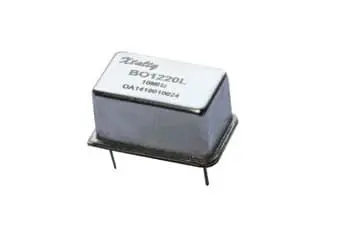
When frequency accuracy and timing stability become mission-critical, standard crystal oscillators are no longer sufficient. Engineers working in telecommunications, satellite communications, aerospace, defense, metrology, scientific research, and synchronization networks often need an ultra-stable oscillator capable of maintaining exceptional frequency precision over extended periods.
Among the most widely used high-performance timing technologies are Oven-Controlled Crystal Oscillators (OCXOs), Rubidium Oscillators, GPS Disciplined Oscillators (GPSDOs), and Hydrogen Masers. Each offers distinct advantages in stability, accuracy, cost, maintenance requirements, and application suitability.
The best choice depends not only on performance specifications but also on factors such as environmental conditions, budget, holdover requirements, infrastructure availability, and long-term operating costs.
Before comparing performance, it is important to understand how each technology generates and maintains frequency stability.
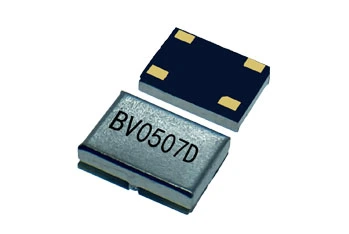
An OCXO uses a quartz crystal oscillator housed within a temperature-controlled oven. The oven maintains a constant operating temperature regardless of ambient conditions, significantly reducing frequency drift.
OCXOs are widely used because they provide excellent short-term stability at a relatively affordable cost.
Rubidium oscillators are atomic frequency standards that use the resonance frequency of rubidium atoms as a reference.
Because atomic transitions are highly consistent, rubidium standards provide superior long-term stability compared with crystal oscillators.
A GPSDO combines a local oscillator (typically an OCXO or Rubidium oscillator) with timing corrections received from GPS satellites.
The local oscillator provides short-term stability while GPS signals continuously correct long-term drift.
Hydrogen masers are among the most accurate frequency standards available outside national metrology laboratories.
They use stimulated emission from hydrogen atoms to generate extremely stable frequency references with exceptionally low phase noise and frequency drift.
Hydrogen masers are typically reserved for the most demanding scientific and space applications.
| Parameter | OCXO | Rubidium Oscillator | GPSDO | Hydrogen Maser |
Short-Term Stability | Excellent | Very Good | Depends on Internal Oscillator | Outstanding |
Long-Term Stability | Good | Excellent | Outstanding | Exceptional |
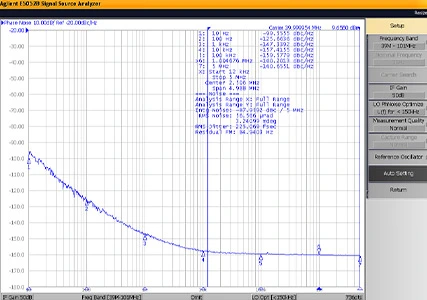
Phase Noise | Excellent | Very Good | Depends on Design | Best Available |
Holdover Performance | Good | Excellent | Varies | Exceptional |
GPS Dependency | No | No | Yes | No |
Warm-Up Time | Minutes | 5-15 Minutes | Depends on Internal Oscillator | Several Hours |
Power Consumption | Moderate | Moderate | Moderate | High |
Maintenance | Low | Moderate | Low | High |
Purchase Cost | Low to Medium | Medium to High | Medium | Extremely High |
Typical Applications | Telecom, Test Equipment | Telecom, Defense | Network Synchronization | Research, Astronomy |
Each technology excels in different operating environments.
Short-term stability refers to frequency consistency over seconds, milliseconds, or even microseconds.
Hydrogen masers offer unmatched short-term stability and ultra-low phase noise.
Typical applications include:
Very Long Baseline Interferometry (VLBI)
Deep-space tracking
Radio astronomy
National timing laboratories
A high-performance OCXO often delivers better short-term stability than a standard rubidium oscillator.
This surprises many engineers.
For applications emphasizing low phase noise rather than absolute long-term accuracy, an OCXO may actually outperform a rubidium standard.
Rubidium devices provide excellent short-term performance but generally do not match premium OCXOs in close-in phase noise.
GPSDO short-term stability depends largely on the internal oscillator.
A GPSDO using a premium OCXO can achieve excellent short-term performance.
Long-term stability becomes increasingly important when frequency accuracy must be maintained over days, months, or years.
When GPS reception remains available, GPSDOs provide exceptional long-term accuracy because they continuously reference satellite atomic clocks.
Hydrogen masers maintain extraordinary long-term stability with minimal drift.
Rubidium standards significantly outperform crystal oscillators over long periods but still exhibit aging effects.
Even the best OCXOs experience aging and drift over time.
For applications requiring absolute frequency accuracy, additional disciplining mechanisms may be necessary.
Phase noise directly affects:
Receiver sensitivity
EVM performance
Radar resolution
Signal purity
Data converter performance
Hydrogen Maser
Premium OCXO
Rubidium Oscillator
GPSDO (depends on internal oscillator)
A common misconception is that atomic standards always provide the lowest phase noise.
In reality, premium OCXOs often outperform rubidium oscillators at close-in offsets.
This is one reason why OCXOs remain popular in:
Microwave radios
Signal generators
Radar systems
Frequency synthesizers
Many synchronization systems must continue operating during GPS outages.
Provides exceptional holdover performance due to extremely low drift.
Widely used for telecom holdover applications.
Can maintain synchronization for extended periods without external references.
Good holdover performance for shorter durations.
Premium double-oven OCXOs can provide impressive results.
Holdover capability depends entirely on the internal oscillator quality.
A GPSDO with a rubidium reference significantly outperforms one using a standard OCXO.
Budget often becomes the deciding factor.
| Technology | Typical Relative Cost |
OCXO | $ |
GPSDO | $$ |
Rubidium Oscillator | $$$ |
Hydrogen Maser | $$$$$$$ |
The performance difference between these technologies can be dramatic, but so can the cost difference.
Many applications achieve excellent results without requiring the most expensive option.
Advantages:
Long service life
Minimal maintenance
Mature technology
Considerations:
Atomic lamp aging
Eventual replacement requirements
Higher service costs
Advantages:
Low maintenance
Considerations:
Antenna installation
GPS signal availability
Vulnerability to jamming or interference
Requires:
Specialized maintenance
Controlled operating environment
Highly trained personnel
Operating costs can exceed the purchase price over the system lifetime.
For:
Mobile base stations
Timing distribution
Network synchronization
Common choices include:
High-performance OCXOs
Rubidium oscillators
GPSDOs
Telecom operators often prefer GPSDO solutions because they combine:
Excellent long-term accuracy
Reasonable cost
Network-wide synchronization
However, rubidium oscillators are frequently deployed as backup holdover sources.
Most laboratory instruments prioritize:
Low phase noise
Frequency purity
Stability
Common solutions include:
Premium OCXOs
GPS-disciplined OCXOs
Rubidium references for calibration systems
In many signal generators and spectrum analyzers, a high-end ultra-stable oscillator based on OCXO technology remains the preferred choice.
Hydrogen masers are commonly used in:
Radio astronomy
Deep-space navigation
Fundamental physics research
National timing laboratories
These applications demand performance levels far beyond commercial requirements.
Research laboratories often use rubidium and GPSDO systems where hydrogen masers would be cost-prohibitive.
The best solution depends on your priorities.
Excellent phase noise
Good short-term stability
Lower acquisition cost
Compact integration
Excellent holdover
Strong long-term stability
Telecom-grade synchronization
Maximum long-term accuracy
Continuous synchronization
Network-wide timing alignment
Ultimate performance
Scientific-grade precision
National standards-level stability
Before selecting an ultra-stable oscillator, engineers should evaluate:
What stability metric matters most?
Is short-term or long-term performance more important?
Will GPS signals always be available?
How much holdover time is required?
What is the total lifecycle cost?
Are maintenance resources available?
What environmental conditions will the system face?
Answering these questions often narrows the choice quickly.
OCXOs, Rubidium Oscillators, GPS Disciplined Oscillators, and Hydrogen Masers each occupy a unique position in the timing and frequency control ecosystem. While Hydrogen Masers deliver unmatched performance, their cost and complexity limit their use to specialized scientific environments. GPSDOs offer outstanding long-term accuracy, Rubidium oscillators excel in holdover applications, and OCXOs continue to provide an excellent balance of phase noise, stability, reliability, and cost.
For most commercial and industrial applications seeking an ultra-stable oscillator, the optimal choice is often a high-performance OCXO, GPSDO, or Rubidium-based solution rather than the most expensive technology available. Selecting the right frequency reference requires balancing technical requirements, operating conditions, budget constraints, and long-term maintenance considerations.
Is a rubidium oscillator better than an OCXO?
For long-term stability and holdover performance, yes. For close-in phase noise, a premium OCXO may actually perform better.
Why do GPS disciplined oscillators achieve such high accuracy?
GPS satellites are synchronized to atomic clocks, allowing GPSDOs to continuously correct local oscillator drift.
Are hydrogen masers used in commercial telecommunications?
Generally no. Their cost and operational complexity make them impractical for most commercial deployments.
What is the best ultra-stable oscillator for telecom networks?
GPSDOs and Rubidium oscillators are the most common choices, often used together for redundancy and holdover capability.
How long can a rubidium oscillator maintain accuracy without GPS?
Depending on the model and environmental conditions, a rubidium oscillator can provide useful holdover performance for hours, days, or even longer during reference signal outages.