English
 français
 Deutsch
 Español
 русский

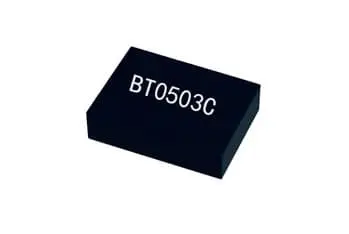
A stratum 3 TCXO is designed for moderate-precision network timing with tight cost and power constraints, typically used in access networks and edge devices. A Stratum 2 oscillator, on the other hand, delivers significantly higher stability, lower drift, and better holdover performance, making it suitable for core network synchronization and aggregation layers. The key difference lies in timing accuracy, stability over time, and system criticality.
Stratum levels classify oscillators based on timing accuracy, stability, and holdover capability in synchronization networks.
Stratum 1: Primary reference (e.g., atomic clocks, GNSS disciplined)
Stratum 2: High-stability secondary reference
Stratum 3: Distribution-level timing source
Stratum 4: Local equipment clocks with minimal requirements
In practice, moving from Stratum 3 to Stratum 2 means a substantial improvement in long-term stability and synchronization reliability.
| Parameter | Stratum 3 TCXO | Stratum 2 Oscillator |
|---|---|---|
| Frequency Stability | Moderate (ppm to sub-ppm) | High (ppb level) |
| Holdover Performance | Limited | Strong |
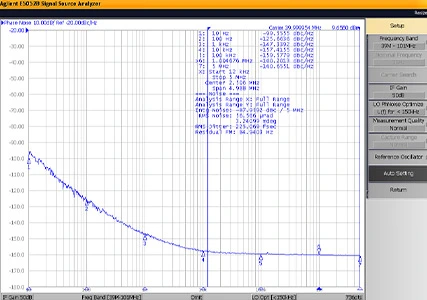
| Phase Noise | Moderate | Lower |
| Aging Rate | Higher | Lower |
| Temperature Sensitivity | Compensated | Actively controlled (often OCXO-based) |
| Power Consumption | Low | Higher |
| Cost | Lower | Higher |
A stratum 3 TCXO prioritizes efficiency and compact design, while Stratum 2 oscillators prioritize precision and network resilience.
A stratum 3 TCXO uses temperature compensation circuitry to maintain frequency stability under varying environmental conditions.
Provides synchronization in access networks
Maintains acceptable timing during short holdover periods
Supports cost-sensitive deployments
Typical applications include:
Base station edge modules
Customer premises equipment (CPE)
Small cell infrastructure
Stratum 2 oscillators are typically built using OCXO (Oven-Controlled Crystal Oscillator) technology or higher-grade components.
Superior holdover stability during GNSS signal loss
Lower phase noise, improving signal integrity
Reduced aging drift, ensuring long-term accuracy
Better temperature isolation, minimizing environmental impact
These characteristics make Stratum 2 essential in:
Central offices
Core network synchronization units
Timing distribution hubs
Holdover refers to the oscillator’s ability to maintain accurate timing when the reference signal is lost.
A stratum 3 TCXO can maintain acceptable timing for short durations
A Stratum 2 oscillator can sustain precise synchronization for extended periods
In modern telecom networks (especially 4G/5G), poor holdover performance can lead to:
Network desynchronization
Increased packet loss
Degraded QoS
In most carrier-grade systems, a stratum 3 TCXO cannot replace a Stratum 2 oscillator.
While a stratum 3 TCXO is sufficient for edge-level timing, it lacks:
Long-term stability required for aggregation layers
Robust holdover capability
Ultra-low phase noise needed for high-capacity networks
However, it can be used in hierarchical timing architectures as a complementary component.
A stratum 3 TCXO typically achieves:
Frequency accuracy in the ppm to sub-ppm range
Moderate temperature stability
Limited long-term drift control
This level of performance is adequate for:
Non-critical synchronization
Distributed network nodes
Cost-sensitive telecom equipment
When choosing between a stratum 3 TCXO and a Stratum 2 oscillator, engineers should evaluate:
Core network → Stratum 2
Access/edge → Stratum 3
Short-term → TCXO
Long-term → OCXO-based Stratum 2
Stable environment → TCXO acceptable
Harsh/variable conditions → Stratum 2 preferred
Limited resources → TCXO
Performance priority → Stratum 2
Although stratum classification focuses on frequency stability, phase noise remains critical in:
RF synchronization
Data transmission quality
Clock recovery systems
Stratum 2 oscillators generally provide lower phase noise, enhancing:
Signal clarity
System reliability
Network performance consistency
From a commercial standpoint, the choice often comes down to deployment scale vs performance requirements.
Large-scale deployments (e.g., small cells) benefit from stratum 3 TCXO due to cost efficiency
High-value infrastructure (e.g., backbone networks) requires Stratum 2 oscillators to ensure service reliability
A well-designed network typically uses both, leveraging each where it delivers the most value.
The difference between a stratum 3 TCXO and a Stratum 2 oscillator is fundamentally about precision, resilience, and system role. TCXO-based Stratum 3 solutions provide efficient, compact timing for edge applications, while Stratum 2 oscillators deliver the stability and reliability required for core network synchronization.
Selecting the right oscillator is not just a component-level decision—it directly impacts network performance, uptime, and scalability.
It is commonly used in telecom access networks, small cells, and edge devices where moderate timing accuracy and low power consumption are required.
Stratum 2 offers significantly higher stability, better holdover performance, and lower drift compared to Stratum 3, making it suitable for core network applications.
Most Stratum 2 oscillators are based on OCXO designs due to their superior temperature stability and precision.
Holdover ensures that network synchronization is maintained even when external timing references (such as GNSS) are temporarily unavailable.
Yes, TCXO can meet Stratum 3 requirements, but it is generally not sufficient for higher stratum levels that demand tighter synchronization accuracy.