English
 français
 Deutsch
 Español
 русский

When low phase noise is a critical design requirement, crystal oscillators remain the preferred choice in most high-performance applications. While MEMS oscillators offer advantages in shock resistance, miniaturization, and programmability, crystal-based solutions generally deliver superior phase noise performance, particularly at close-in offsets where timing precision directly impacts system performance.
For designers selecting a low phase noise oscillator for RF communications, test equipment, radar systems, or high-speed networking, understanding the trade-offs between crystal and MEMS technologies is essential.
Phase noise refers to the short-term frequency fluctuations of an oscillator around its ideal output frequency. It is typically measured in dBc/Hz at specified frequency offsets from the carrier.
Lower phase noise translates into:
Better signal integrity
Improved receiver sensitivity
Reduced bit error rates
Higher spectral efficiency
Better ADC and DAC performance
Improved radar resolution
As wireless systems continue moving toward higher frequencies and wider bandwidths, oscillator phase noise has become one of the most important timing specifications.
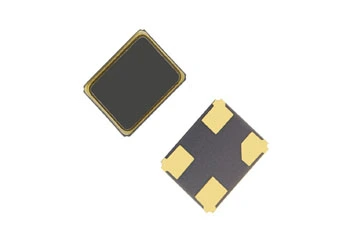
Crystal oscillators use the piezoelectric properties of quartz crystals to generate highly stable frequencies.
The exceptionally high Q-factor (Quality Factor) of quartz resonators allows crystal oscillators to achieve excellent frequency stability and very low phase noise.
Common crystal oscillator types include:
XO (Crystal Oscillator)
TCXO (Temperature Compensated Crystal Oscillator)
VCXO (Voltage Controlled Crystal Oscillator)
OCXO (Oven Controlled Crystal Oscillator)
For applications requiring an ultra low phase noise oscillator, OCXO technology often represents the industry benchmark.
Extremely low phase noise
High Q-factor resonators
Excellent frequency stability
Proven long-term reliability
Wide industry acceptance
Suitable for precision timing applications
More sensitive to shock and vibration
Larger package sizes compared to MEMS
Longer warm-up times for OCXO designs
Limited frequency programmability
MEMS (Micro-Electro-Mechanical Systems) oscillators utilize silicon-based resonators combined with integrated circuitry to generate clock signals.
Unlike quartz devices, MEMS oscillators are manufactured using semiconductor fabrication processes, enabling high integration and programmable frequency capabilities.
MEMS technology has gained significant market share in:
Consumer electronics
Automotive systems
Industrial IoT devices
Portable equipment
Excellent shock resistance
High vibration immunity
Smaller package sizes
Programmable output frequencies
Faster lead times
Better supply chain flexibility
Higher phase noise in many applications
Lower resonator Q-factor
Increased close-in noise performance challenges
Not ideal for ultra-high-performance RF systems
The primary reason many engineers continue selecting quartz technology is its superior phase noise performance.
| Parameter | Crystal Oscillator | MEMS Oscillator |
Resonator Q-Factor | Very High | Lower |
Close-In Phase Noise | Excellent | Moderate |
Far-Out Phase Noise | Excellent | Good |
Frequency Stability | Excellent | Good to Excellent |
Jitter Performance | Excellent | Good |
Shock Resistance | Moderate | Excellent |
Frequency Programmability | Limited | Excellent |
RF System Suitability | Excellent | Application Dependent |
The higher Q-factor of quartz resonators naturally suppresses frequency fluctuations, leading to lower phase noise.
In practical RF designs, crystal oscillators frequently outperform MEMS oscillators by 10-30 dB or more at critical offset frequencies.
The performance difference largely stems from resonator physics.
Quartz crystals exhibit:
Extremely high mechanical Q
Lower energy loss
Narrower resonance bandwidth
Superior frequency selectivity
MEMS resonators, while continuously improving, generally possess lower Q-factors, which can increase phase noise near the carrier frequency.
For systems requiring exceptional spectral purity, quartz remains difficult to replace.
Not every application requires an ultra low phase noise oscillator.
However, phase noise becomes critical in the following systems:
5G base stations
Small cells
Massive MIMO systems
Microwave backhaul
Poor phase noise can degrade modulation accuracy and reduce network capacity.
Radar performance is heavily dependent on oscillator purity.
Lower phase noise contributes to:
Better target detection
Higher resolution
Improved clutter suppression
Equipment such as:
Spectrum analyzers
Signal generators
Network analyzers
often relies on premium crystal-based timing sources to achieve measurement accuracy.
Applications including:
100G/400G Ethernet
Optical networking
Data center switches
require low-jitter clock sources to maintain signal integrity.
Mission-critical systems frequently specify OCXOs and other crystal technologies because of their proven phase noise characteristics.
Although crystal oscillators generally win in phase noise performance, MEMS oscillators can be the smarter solution in certain environments.
Consider MEMS when:
MEMS oscillators can withstand mechanical stress levels that may damage quartz devices.
Common examples include:
Industrial machinery
Automotive electronics
Oil and gas equipment
Portable military systems
Programmable MEMS devices simplify inventory management by supporting multiple frequencies from a single platform.
MEMS oscillators are available in extremely compact packages suitable for:
Wearables
Mobile devices
Compact IoT systems
In high-volume applications where ultra-low phase noise is unnecessary, MEMS solutions can provide attractive cost and supply chain advantages.
One of the most common purchasing questions is whether the phase noise advantage of quartz actually affects system performance.
The answer depends on the application.
For:
Basic microcontroller clocks
Consumer electronics
Industrial controls
the difference may be negligible.
For:
RF transceivers
High-speed ADCs
Precision synchronization systems
Radar platforms
the oscillator can become a limiting factor for overall system performance.
In these environments, investing in a premium low phase noise oscillator often produces measurable improvements throughout the entire signal chain.
Shock resistance is critical
Programmability is required
Cost is a primary concern
Phase noise is not the key performance driver
Moderate phase noise performance is sufficient
Temperature stability is important
Size and power consumption matter
The lowest possible phase noise is required
Frequency stability is mission-critical
RF performance drives system success
For demanding RF, aerospace, instrumentation, and telecom applications, OCXO-based solutions remain the gold standard for achieving ultra low phase noise oscillator performance.
Before selecting an oscillator supplier, engineers should evaluate:
What phase noise level is required at specific offsets?
What jitter budget does the system allow?
Is temperature stability critical?
Will the device experience shock or vibration?
Is frequency programmability necessary?
What are the long-term reliability requirements?
Are there size or power consumption constraints?
These factors often determine whether crystal or MEMS technology delivers the best overall value.
For applications where phase noise directly impacts system performance, crystal oscillators continue to outperform MEMS oscillators. Their higher resonator Q-factor, lower close-in phase noise, and superior spectral purity make them the preferred choice for RF communications, radar, test equipment, aerospace systems, and high-speed networking.
MEMS oscillators offer compelling advantages in ruggedness, programmability, and miniaturization, making them ideal for many industrial and consumer applications. However, when selecting a low phase noise oscillator or an ultra low phase noise oscillator, quartz-based solutions—particularly TCXOs and OCXOs—remain the benchmark for precision timing and frequency control.
Do MEMS oscillators have lower phase noise than crystal oscillators?
In most cases, no. Crystal oscillators typically provide lower phase noise due to the higher Q-factor of quartz resonators.
What is considered an ultra-low phase noise oscillator?
An ultra-low phase noise oscillator is a device specifically designed to minimize frequency fluctuations, often used in radar, aerospace, telecommunications, and precision instrumentation systems.
Are MEMS oscillators replacing crystal oscillators?
MEMS oscillators are gaining market share in many applications, but crystal oscillators remain dominant in systems requiring the highest timing accuracy and lowest phase noise.
Why do RF systems prefer crystal oscillators?
RF systems benefit from lower phase noise, lower jitter, and better spectral purity, all of which are strengths of crystal-based oscillator technology.
Which oscillator type is best for 5G infrastructure?
For critical timing functions in 5G base stations and network equipment, crystal oscillators—especially high-performance TCXOs and OCXOs—are generally preferred due to their superior phase noise characteristics.