English
 français
 Deutsch
 Español
 русский

Phase noise remains one of the most challenging performance limitations in modern RF integrated circuits. Whether designing PLLs, frequency synthesizers, 5G transceivers, radar systems, satellite communications equipment, or high-speed clock generation circuits, engineers often find that the overall system performance is constrained by the phase noise of the Voltage Controlled Oscillator (VCO).
While CMOS technology offers advantages in integration, scalability, and manufacturing cost, achieving low phase noise in a CMOS voltage controlled oscillator requires careful architectural, circuit-level, and layout optimization. Fortunately, decades of RF design experience have produced several proven techniques that can significantly improve VCO spectral purity.
This article examines ten of the most effective methods used by RF engineers to reduce phase noise in CMOS VCO designs, along with their practical trade-offs and implementation considerations.
Before discussing optimization techniques, it's important to understand why phase noise deserves so much attention.
Excessive phase noise can result in:
Higher Error Vector Magnitude (EVM)
Increased Bit Error Rate (BER)
Reduced receiver sensitivity
Poor adjacent channel rejection
Increased timing jitter
Lower spectral efficiency
Reduced radar detection accuracy
As wireless standards continue moving toward higher-order modulation schemes such as 256-QAM and 1024-QAM, oscillator phase noise becomes increasingly critical.
Several factors contribute to phase noise generation:
Thermal noise
Flicker (1/f) noise
Active device noise
Resonator quality factor (Q)
Power supply noise
Substrate coupling
Layout parasitics
Tuning element nonlinearity
Successful phase noise reduction usually requires addressing multiple sources simultaneously.
The resonator Q-factor has perhaps the greatest influence on phase noise performance.
Higher Q means:
Better energy storage
Lower energy loss
Reduced phase fluctuations
Improved spectral purity
For LC VCOs, engineers can improve Q by:
Using high-quality inductors
Optimizing metal thickness
Reducing parasitic resistance
Selecting low-loss capacitors
According to Leeson's model, phase noise improves directly with increasing resonator quality.
Significant phase noise improvement
Better close-in noise performance
Larger die area
Increased manufacturing cost
Oscillation amplitude directly affects signal-to-noise ratio inside the resonator.
Higher signal swing generally improves phase noise because noise becomes a smaller percentage of total signal energy.
Engineers often optimize:
Bias current
Tank impedance
Active device sizing
However, excessive amplitude may introduce:
Device nonlinearity
Reliability concerns
Increased power consumption
The goal is maximizing signal swing without entering excessive distortion regions.
Differential topologies have become standard practice for modern RF VCOs.
Advantages include:
Common-mode noise rejection
Better power supply isolation
Reduced substrate interference
Lower sensitivity to external noise
Most high-performance CMOS voltage controlled oscillator designs utilize differential cross-coupled architectures for this reason.
Wireless transceivers
Frequency synthesizers
PLL systems
RF front-end modules
Close-in phase noise is often dominated by flicker noise.
This low-frequency noise can be converted into phase noise through nonlinear circuit mechanisms.
Common mitigation strategies include:
Symmetrical layout design
Differential architectures
Proper transistor sizing
Tail current optimization
Flicker-noise reduction techniques
Reducing flicker noise is particularly important in narrowband communication systems.
Power supply noise frequently appears as phase modulation within the VCO.
Common solutions include:
Separate low-noise regulators can isolate sensitive oscillator circuitry from digital switching noise.
Engineers often implement:
RC filters
LC filters
Decoupling networks
Separating RF and digital supplies can substantially reduce unwanted coupling.
Lower spurious tones
Reduced phase noise
Improved frequency stability
Varactors are essential tuning elements in LC VCOs.
Unfortunately, poorly designed tuning networks can introduce:
Noise sensitivity
Nonlinearity
Reduced tank Q
Best practices include:
High-Q varactor structures
Proper tuning voltage filtering
Linearized tuning curves
Reduced parasitic capacitance
Engineers should pay particular attention to tuning voltage cleanliness because noise on the control line directly modulates oscillator frequency.
Current reuse architectures allow multiple transistor stages to share bias current.
Benefits include:
Higher oscillation amplitude
Improved phase noise efficiency
Reduced power consumption
These techniques are increasingly common in:
Low-power wireless devices
Mobile communications
Battery-operated RF systems
Design complexity increases, requiring careful optimization.
Many promising VCO designs fail to achieve simulated performance due to layout issues.
Critical layout considerations include:
Maintain perfect differential symmetry whenever possible.
Reduce:
Series resistance
Parasitic capacitance
Inductive coupling
Sensitive nodes should be shielded from:
Digital circuitry
Clock lines
High-current paths
A robust ground structure helps minimize substrate noise injection.
In advanced CMOS processes, layout optimization can sometimes provide several dB of phase noise improvement without changing the schematic.
Attempting to achieve a wide tuning range solely through varactors often compromises phase noise.
Switched capacitor banks offer a better solution.
Advantages include:
Improved tank Q
Reduced varactor sensitivity
Better tuning linearity
Lower phase noise
Many modern frequency synthesizers combine:
Coarse tuning via capacitor banks
Fine tuning via varactors
This approach delivers both flexibility and performance.
Injection locking can significantly improve oscillator spectral purity.
The concept involves synchronizing the VCO to a cleaner reference signal.
Benefits include:
Reduced phase noise
Faster settling time
Improved frequency stability
Applications include:
Frequency multipliers
RF synthesizers
Clock distribution systems
Injection locking increases design complexity and may not be suitable for every application.
Not all optimization methods provide equal results.
| Technique | Typical Impact on Phase Noise |
Higher Tank Q | Very High |
Differential Architecture | High |
Power Supply Isolation | High |
Flicker Noise Reduction | High |
Layout Optimization | Medium to High |
Varactor Optimization | Medium |
Switched Capacitor Banks | Medium |
Injection Locking | High |
Current Reuse | Medium |
Amplitude Optimization | Medium to High |
For most designs, improving resonator Q and reducing supply noise provide the greatest return on investment.
Engineers frequently ask whether phase noise optimization differs between architectures.
| Parameter | LC VCO | Ring VCO |
Baseline Phase Noise | Better | Worse |
Resonator Q Optimization | Available | Not Applicable |
Area Efficiency | Lower | Higher |
Tuning Range | Moderate | Wide |
CMOS Integration | Good | Excellent |
For applications demanding the lowest possible phase noise, LC architectures generally remain the preferred choice.
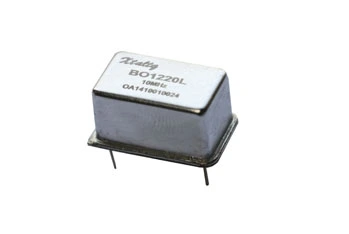
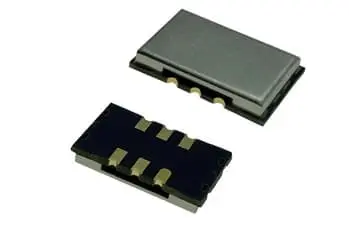
In some applications, achieving required phase noise performance solely through an integrated CMOS VCO becomes impractical.
Examples include:
Radar systems
Aerospace electronics
Precision instrumentation
Microwave backhaul
High-end test equipment
In these cases, designers may use:
Crystal oscillators
TCXOs
OCXOs
External frequency references
Although component cost increases, system-level performance improvements often justify the investment.
Before finalizing a design or purchasing components, engineers should evaluate:
What phase noise level is required?
What offset frequencies matter most?
How important is power consumption?
Is die area constrained?
What tuning range is required?
What environmental conditions will the system face?
Is long-term frequency stability important?
Answering these questions helps identify the most cost-effective path toward meeting performance goals.
Reducing phase noise in a CMOS voltage controlled oscillator requires a holistic approach that combines resonator optimization, circuit design improvements, power integrity strategies, and careful layout practices. While no single technique can eliminate phase noise entirely, combining multiple proven methods can dramatically improve oscillator performance.
For RF engineers developing next-generation wireless infrastructure, radar systems, satellite communications equipment, or high-speed data converters, phase noise optimization remains one of the highest-leverage design investments. By focusing on resonator quality, supply cleanliness, flicker noise reduction, and architecture selection, designers can achieve meaningful improvements in spectral purity, system reliability, and overall RF performance.
What is the biggest contributor to phase noise in a CMOS VCO?
The resonator Q-factor, device noise, and power supply noise are typically the dominant contributors.
How can power supply noise affect phase noise?
Supply noise modulates the oscillator frequency, creating additional phase fluctuations and spurious tones.
Why are differential VCOs preferred?
Differential architectures provide better noise rejection, improved isolation, and lower sensitivity to external interference.
Does increasing oscillation amplitude always improve phase noise?
Generally yes, but excessive amplitude may introduce nonlinear behavior and higher power consumption.
Are LC VCOs better than Ring VCOs for low phase noise?
In most RF applications, LC VCOs achieve significantly better phase noise performance due to their high-Q resonant tank structures.