English
 français
 Deutsch
 Español
 русский

A tcxo 100mhz is a temperature-compensated crystal oscillator designed to provide a highly stable 100MHz reference frequency with low frequency drift, low phase noise, and reliable performance across changing environmental conditions. It is widely used in communication infrastructure, RF systems, test equipment, radar applications, and precision electronic systems where frequency accuracy and stability are critical.
Selecting the right 100MHz oscillator requires careful evaluation of frequency stability, phase noise performance, operating temperature range, output type, power consumption, and application requirements. A higher frequency specification alone does not guarantee better system performance; the oscillator must match the electrical and environmental conditions of the target application.
A 100MHz TCXO is a temperature-compensated crystal oscillator that uses a quartz crystal resonator combined with a temperature compensation circuit to maintain a stable 100MHz output frequency.
Quartz crystals naturally exhibit frequency variation as temperature changes. A TCXO compensates for this behavior by monitoring temperature characteristics and applying correction signals to reduce frequency deviation.
The basic operating process includes:
Quartz crystal resonance
The quartz crystal vibrates at a precise natural frequency based on its physical properties and cutting angle.
Temperature compensation
An internal compensation circuit adjusts the oscillator output to minimize temperature-related frequency changes.
Frequency amplification and output generation
The oscillator circuit converts the stable resonance signal into a usable 100MHz output compatible with electronic systems.
Compared with standard crystal oscillators, a tcxo 100mhz provides significantly improved frequency stability while maintaining lower power consumption and smaller size compared with OCXO solutions.
A 100MHz frequency reference is commonly selected because it provides an excellent balance between system clock requirements, signal processing capability, and frequency synthesis performance.
Many RF and communication systems use 100MHz as a reference frequency because it can support:
High-speed data processing
Stable frequency multiplication and division
Low-jitter clock generation
Precise synchronization
A high-quality 100mhz oscillator can improve overall system performance by reducing timing errors, signal distortion, and synchronization issues.
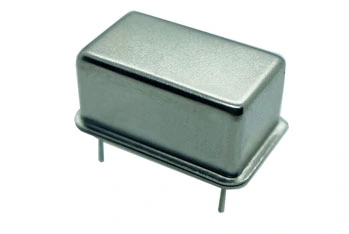
A tcxo 100mhz is widely used in industries where stable frequency control is required.
Telecommunication equipment requires highly stable reference clocks to maintain network synchronization.
Typical applications include:
5G base stations
Wireless communication modules
Microwave communication systems
Network timing equipment
In these systems, frequency instability can lead to:
Signal synchronization errors
Reduced transmission quality
Increased bit error rates
A low-noise 100MHz TCXO provides the stable reference needed for reliable RF operation.
Precision instruments depend on accurate timing references for measurement consistency.
Applications include:
Spectrum analyzers
Signal generators
Frequency counters
Network analyzers
For measurement systems, key oscillator parameters include:
Frequency accuracy
Aging performance
Phase noise
Short-term stability
A high-performance 100mhz oscillator helps ensure repeatable measurement results.
Radar and aerospace systems require timing components that can operate under demanding conditions.
A 100MHz TCXO may be used in:
Radar signal processing units
Navigation systems
Satellite communication equipment
Avionics systems
Important requirements include:
Wide operating temperature range
Low phase noise
High shock resistance
Long-term frequency stability
Industrial automation equipment often operates continuously in environments with temperature fluctuations and electrical noise.
Applications include:
Industrial controllers
Data acquisition systems
Motion control equipment
Precision monitoring systems
A stable frequency reference improves system synchronization and operational reliability.
The accuracy of a tcxo 100mhz is generally specified in parts per million (ppm).
Typical stability options include:
±5 ppm: General-purpose applications
±2.5 ppm: Industrial and communication systems
±1 ppm or better: Precision timing applications
For example, a 100MHz TCXO with ±1 ppm stability may experience a maximum frequency variation of approximately ±100Hz under specified operating conditions.
However, actual frequency performance depends on:
Temperature variation
Initial frequency tolerance
Supply voltage changes
Load conditions
Aging over time
Engineers should evaluate total frequency stability rather than only the initial accuracy specification.
Choosing the correct 100MHz oscillator requires evaluating several technical parameters.
Frequency stability is one of the most important selection criteria.
Consider:
Required system accuracy
Communication standard requirements
Environmental temperature changes
Long-term operation period
A lower ppm specification provides better frequency control but may increase cost.
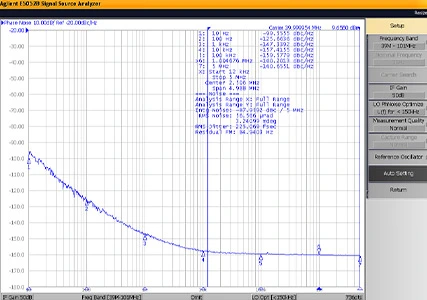
For RF applications, phase noise is often as important as frequency accuracy.
Low phase noise performance improves:
Signal clarity
Receiver sensitivity
Frequency synthesis performance
Data communication reliability
Applications such as radar, wireless infrastructure, and test equipment usually require optimized phase noise characteristics.
A 100MHz TCXO may provide different output formats depending on system requirements.
Common output types include:
Suitable for:
Digital circuits
Microcontrollers
General timing applications
Used for:
High-speed digital systems
Low-noise clock distribution
Common in:
Communication systems
High-performance networking equipment
The output type must match the receiving device to ensure proper signal integrity.
The operating environment directly affects oscillator performance.
Common temperature grades include:
Commercial: 0°C to +70°C
Industrial: -40°C to +85°C
Extended temperature: for harsh environments
For outdoor communication equipment or industrial systems, an industrial-grade tcxo 100mhz is typically recommended.
Power consumption is especially important for:
Portable equipment
Battery-powered communication devices
Remote monitoring systems
A well-designed 100MHz TCXO should provide the required stability while maintaining efficient power usage.
Modern electronic systems require compact timing solutions.
When selecting a 100MHz oscillator, consider:
Package dimensions
Mounting method
Vibration resistance
Mechanical stress
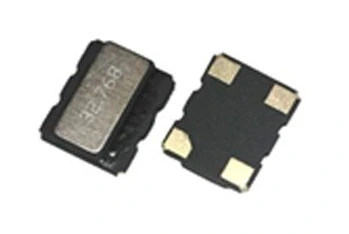
Small-form-factor TCXO solutions are commonly used in communication modules and embedded systems.
The primary difference is temperature compensation capability.
| Feature | Standard 100MHz Crystal Oscillator | 100MHz TCXO |
|---|---|---|
| Temperature compensation | No | Yes |
| Frequency stability | Moderate | High |
| Temperature drift | Higher | Lower |
| Cost | Lower | Higher |
| Applications | General electronics | Precision timing systems |
A standard crystal oscillator may be sufficient for applications with stable environmental conditions. However, systems requiring reliable frequency accuracy across temperature changes typically require a TCXO.
Both TCXO and OCXO technologies provide improved stability, but their designs are different.
| Feature | 100MHz TCXO | 100MHz OCXO |
|---|---|---|
| Stability | High | Very high |
| Temperature control | Electronic compensation | Crystal oven control |
| Power consumption | Low | Higher |
| Warm-up time | Short | Longer |
| Size | Compact | Larger |
A tcxo 100mhz is preferred when the system requires high stability with low power consumption and compact size. An OCXO is typically selected for laboratory, telecom synchronization, and applications requiring extremely precise frequency control.
A 100MHz output frequency alone does not define oscillator quality. Poor phase noise performance can negatively impact RF system performance.
Using a commercial-grade oscillator in an industrial environment may cause unexpected frequency drift.
Ultra-high stability products may increase system cost without providing meaningful performance improvements if the application does not require them.
The output voltage level, waveform, and load requirements must match the system design.
A properly selected 100MHz oscillator improves system performance by providing:
Stable clock references
Reduced timing errors
Improved signal synchronization
Better communication reliability
Consistent operation under temperature changes
For advanced electronic systems, the oscillator is not simply a clock source; it is a critical component that directly affects overall system accuracy and reliability.
A tcxo 100mhz provides a reliable and precise frequency reference for applications requiring high stability, low phase noise, and dependable operation under changing environmental conditions.
When selecting a 100MHz TCXO, engineers should evaluate frequency stability, phase noise, temperature range, output compatibility, power consumption, and long-term reliability. The optimal oscillator solution depends on the specific requirements of the end application rather than frequency alone.
With increasing demands in communication networks, industrial automation, aerospace electronics, and precision measurement systems, high-performance 100MHz oscillators continue to play an essential role in modern electronic design.
A 100MHz TCXO is commonly used as a stable frequency reference in communication systems, RF equipment, test instruments, radar systems, and industrial electronics.
The accuracy depends on the stability specification. Common 100MHz TCXO products range from ±5 ppm to ±1 ppm or better, depending on application requirements.
A TCXO provides temperature compensation, which significantly reduces frequency drift caused by temperature changes and improves system reliability.
A TCXO uses electronic temperature compensation and offers lower power consumption, while an OCXO uses a heated crystal oven to achieve higher stability with increased power requirements.
Common output formats include CMOS, LVDS, and LVPECL. The correct choice depends on the interface requirements of the application.
A high-quality 100MHz TCXO can operate reliably for many years when used within specified electrical, mechanical, and environmental conditions.
This is the last one.