English
 français
 Deutsch
 Español
 русский

A crystal oscillator is an electronic timing component that uses the mechanical resonance of a quartz crystal to generate a highly stable frequency signal. It converts the physical vibration characteristics of a quartz crystal into a precise electrical oscillation, providing a reliable clock source for electronic systems.
A quartz crystal oscillator is widely used because quartz has excellent piezoelectric properties, allowing it to maintain accurate frequency control with low drift, low phase noise, and long-term stability. From communication equipment and automotive electronics to industrial control systems and consumer devices, crystal oscillators provide the timing reference required for reliable operation.
A crystal oscillator works based on the piezoelectric effect of quartz crystal. When an alternating electrical voltage is applied to a quartz crystal, the crystal mechanically vibrates at its natural resonant frequency. These mechanical vibrations generate an electrical signal with a stable frequency output.
The working process includes three main stages:
Electrical excitation
An electronic circuit applies voltage to the quartz crystal, causing it to deform and vibrate.
Mechanical resonance
The quartz crystal vibrates at a specific frequency determined by its physical dimensions, cutting angle, and material characteristics.
Frequency feedback and amplification
The oscillator circuit maintains continuous oscillation by feeding part of the output signal back into the crystal circuit, producing a stable clock signal.
The resonance frequency of a quartz oscillator is highly predictable, which makes it an ideal frequency reference for modern electronic systems.
Quartz is preferred for crystal oscillators because of its unique electrical and mechanical properties.
Key advantages include:
High Q-factor: Quartz crystals have extremely low energy loss, allowing stable oscillation.
Excellent frequency stability: Quartz maintains consistent resonance characteristics over time.
Low aging rate: High-quality quartz oscillator designs can provide reliable performance over many years.
Strong mechanical properties: Quartz can withstand environmental stress better than many alternative materials.
The combination of these characteristics enables quartz crystal oscillators to achieve much higher accuracy than many other timing solutions.
The terms crystal oscillator and quartz crystal oscillator are often used interchangeably, but there is a technical distinction.
A crystal oscillator refers broadly to any oscillator that uses a piezoelectric crystal as its frequency control element. A quartz crystal oscillator specifically uses quartz as the resonating material.
Since quartz is the most common crystal material used in timing applications, most commercial crystal oscillators today are quartz-based.
| Feature | Crystal Oscillator | Quartz Crystal Oscillator |
|---|---|---|
| Resonating material | Any piezoelectric crystal | Quartz crystal |
| Frequency stability | Depends on material | Extremely stable |
| Application range | General term | Most industrial timing applications |
| Common usage | Technical category | Commercial timing devices |
In practical electronics manufacturing, when engineers refer to a crystal oscillator, they usually mean a quartz-based device.
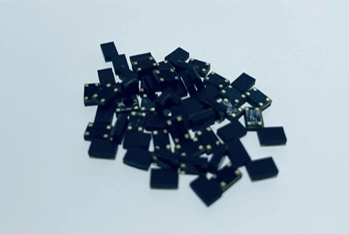
A quartz oscillator typically consists of several critical elements:
The quartz crystal is the core frequency control element. Its dimensions and cut determine the operating frequency and performance characteristics.
Common crystal cuts include:
AT-cut quartz crystals for general-purpose applications
SC-cut crystals for high-precision timing systems
The oscillator circuit provides electrical excitation and maintains continuous oscillation. Circuit design directly affects:
Start-up time
Output stability
Power consumption
Phase noise performance
The package protects the quartz crystal from environmental factors such as:
Humidity
Mechanical vibration
Contamination
Temperature variation
Modern quartz oscillator packages are designed to support compact electronics while maintaining high frequency stability.
The frequency of a quartz crystal oscillator is mainly determined by the physical characteristics of the quartz crystal.
Important factors include:
A thinner quartz crystal generally produces a higher resonant frequency, while a thicker crystal produces a lower frequency.
The orientation of the quartz crystal affects temperature characteristics and frequency stability.
The oscillator circuit must match the crystal’s specified load capacitance to achieve the correct operating frequency.
Precision processing and calibration are essential for achieving tight frequency tolerance.
When selecting a crystal oscillator, engineers should evaluate several technical parameters.
Frequency stability describes how much the output frequency changes under different operating conditions.
Factors affecting stability include:
Temperature variation
Supply voltage fluctuation
Aging
Mechanical stress
For applications requiring higher accuracy, temperature-compensated crystal oscillators (TCXO) or oven-controlled crystal oscillators (OCXO) may be selected.
Frequency tolerance indicates the initial deviation from the specified frequency at room temperature.
Typical specifications include:
±10 ppm
±20 ppm
±30 ppm
Higher-performance applications require tighter tolerance.
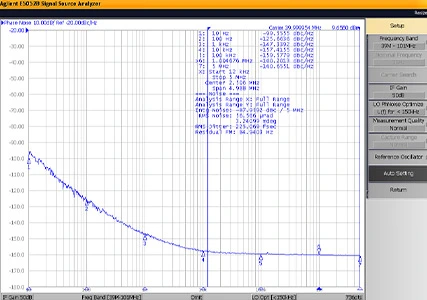
Phase noise represents short-term frequency fluctuations around the carrier signal.
Low phase noise quartz oscillators are critical in:
RF communication systems
Radar equipment
Precision measurement instruments
Wireless infrastructure
The operating environment directly impacts oscillator performance.
Common temperature grades include:
Commercial: 0°C to +70°C
Industrial: -40°C to +85°C
Extended temperature ranges for specialized applications
Crystal oscillators are essential timing components in many electronic systems.
Wireless communication systems rely on quartz oscillators for:
Frequency synthesis
Signal synchronization
Data transmission accuracy
Applications include:
Base stations
Network equipment
RF modules
Many everyday devices use crystal oscillators, including:
Smartphones
Smart watches
Digital cameras
Computers
They provide accurate timing for processors, communication chips, and system clocks.
Modern vehicles require stable timing references for:
Engine control systems
ADAS systems
Infotainment systems
Vehicle networking
Automotive-grade quartz crystal oscillators must withstand temperature changes, vibration, and long operating periods.
Industrial automation systems use quartz oscillators for:
PLC controllers
Measurement equipment
Control systems
Data acquisition devices
A quartz oscillator provides the stable reference frequency required for synchronized electronic operation.
Without a reliable timing source, systems may experience:
Communication errors
Data processing failures
Signal synchronization problems
Reduced measurement accuracy
The performance of the oscillator directly influences overall system reliability, especially in applications where timing precision is critical.
A high-quality crystal oscillator can typically operate for many years when used within its specified conditions.
The service life depends on:
Quartz crystal quality
Package design
Operating temperature
Electrical stress
Environmental conditions
Aging is an important consideration in long-term applications because quartz frequency gradually changes over time. Selecting a properly specified quartz crystal oscillator helps maintain stable performance throughout the product lifecycle.
Selecting the correct oscillator requires matching the device characteristics with application requirements.
Important selection criteria include:
Required frequency
Confirm the operating frequency required by the system.
Frequency stability requirement
Determine acceptable ppm deviation based on application accuracy requirements.
Operating environment
Consider temperature range, vibration, humidity, and mechanical conditions.
Output format
Select the appropriate output type, such as:
CMOS
LVDS
LVPECL
Sine wave
Power consumption
Battery-powered devices require low-power oscillator solutions.
Package size
Compact electronics often require miniature quartz oscillator packages.
A crystal oscillator is a fundamental timing component that uses the resonance characteristics of quartz to generate a precise and stable frequency signal. The reliability, accuracy, and low power consumption of quartz crystal oscillators make them essential in communication systems, automotive electronics, industrial equipment, and consumer devices.
Understanding how a quartz oscillator works and how its specifications affect system performance allows engineers to select the right timing solution for each application. Factors such as frequency stability, phase noise, temperature range, and aging performance should always be evaluated together to achieve the best balance between cost and performance.
The main purpose of a crystal oscillator is to provide a stable reference frequency for electronic circuits. It acts as a clock source for processors, communication systems, and timing applications.
A quartz crystal oscillator generates frequency through the piezoelectric effect. Electrical energy causes the quartz crystal to vibrate mechanically, and these vibrations are converted into a stable electrical oscillation.
Quartz oscillators provide high accuracy because quartz has excellent frequency stability, a high Q-factor, and predictable resonance characteristics.
A quartz crystal is the passive resonating element, while a crystal oscillator combines the quartz crystal with an electronic circuit to generate a complete oscillating output signal.
Quartz crystal oscillators are available across a wide frequency range, commonly from several MHz to hundreds of MHz depending on design requirements and application needs.
Some crystal oscillators can use other piezoelectric materials, but quartz remains the most widely used material because of its superior stability and reliability.