English
 français
 Deutsch
 Español
 русский
In the rapidly changing communication environment, walkie-talkies are widely used in critical scenarios such as public safety, emergency communication, industrial production, and outdoor exploration due to their key features: no reliance on operator networks, instant two-way communication, and free calls. Especially with the accelerating deployment of next-generation communication technologies (such as PoC and MCS), walkie-talkies are transitioning from traditional private network communication tools to modern communication terminals that integrate broadband, intelligence, and cross-industry applications.
High-Precision Frequency Control Ensures Communication Stability
The essence of walkie-talkie communication is the efficient management of frequency resources and the accurate execution of modulation and demodulation processes. During transmission, the generation of RF signals relies on a highly stable frequency reference. If there is frequency drift, it will directly affect communication quality or even cause interruptions. TCXO stabilizes frequency in complex environments through its temperature compensation circuit, effectively ensuring communication continuity.
More Suitable for Mobile Terminals Compared to OCXO
Although OCXO offers extremely high stability, its high power consumption and large size make it unsuitable for portable devices. TCXO, with its low power consumption, small size, and quick response, becomes a more cost-effective solution for walkie-talkies.
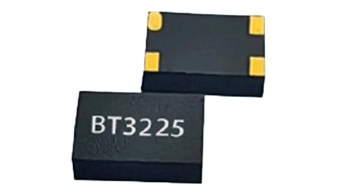
Strong Environmental Adaptability Enhances System Reliability
In scenarios of high temperatures, severe cold, or vibrations, ordinary crystals often face serious drift. The TCXO module can control frequency deviation within ±0.5ppm through its built-in temperature sensing and compensation mechanism, ensuring stable system operation.
The working principle of the TCXO module (Temperature Compensated Crystal Oscillator) involves several key modules. Below is a brief presentation of its compensation mechanism in table form:
| Module/Component | Function Description |
|---|---|
| Quartz Crystal | Oscillation frequency reference, affected by temperature drift |
| Thermistor (NTC/PTC) | Sense ambient temperature and output voltage signals proportional to temperature |
| Variable Capacitor/Varactor Diode | Dynamically adjust reactance after receiving compensation signals to correct frequency deviation |
| Compensation Network Circuit | Calibrates using data from multiple temperature points to achieve optimal compensation |
| Modeling and Calibration Process | Precision testing and adjustments during the design phase ensure the frequency curve meets design goals |
This dynamic adjustment mechanism enables the TCXO module to maintain high output frequency stability within the range of -40℃ to +85℃, far superior to uncompensated standard crystals.
As "independent control" becomes a national strategic direction, the international substitution of the TCXO module in communication equipment has become an industry focus. On one hand, international crystal companies have made significant advancements in crystal design, packaging technology, and temperature compensation algorithms, gradually breaking Western monopolies. On the other hand, the TCXO module, as a fundamental component for products like walkie-talkies, small base stations, and smart terminals, is driving the upgrade of the local industrial chain due to its demands for large-scale production, low power consumption, and high performance.
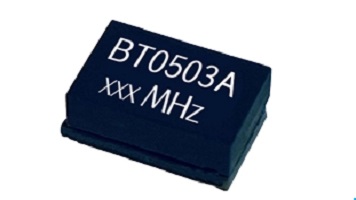
In the future, the internationalization of the TCXO not only concerns the security and controllability of communication systems but also unlocks greater value in fields such as IoT, drones, and industrial automation.