English
 français
 Deutsch
 Español
 русский

In high-performance communication systems, every component contributes to signal integrity — and none more so than the oscillator. Frequency stability, low jitter, and minimal phase noise determine how reliably a system can transmit, receive, and process signals. Among available timing devices, the ultra low phase noise TCXO (Temperature Compensated Crystal Oscillator) stands out as the optimal solution for applications demanding superior spectral purity and stability.
But with numerous options available, how do you choose the right ultra low phase noise TCXO for your communication system? This article breaks down the key parameters, benefits, and selection criteria to help you make the best decision for your design.
A TCXO compensates for frequency drift caused by temperature fluctuations, ensuring precise timing performance across wide environmental ranges. However, an ultra low phase noise TCXO is a more advanced variant, engineered with superior crystal design and noise-optimized circuitry to achieve exceptionally clean signals and stable frequency output.
Phase noise refers to the short-term random fluctuations in the phase of a signal. In communication systems, excessive phase noise can cause data errors, degraded modulation accuracy, and poor synchronization. Therefore, minimizing phase noise is critical for applications like 5G infrastructure, radar, satellite communication, and test instrumentation.
| Parameter | Standard TCXO | Ultra Low Phase Noise TCXO |
|---|---|---|
| Frequency Stability | ±0.5 to ±2.5 ppm | ±0.1 to ±0.5 ppm |
| Typical Phase Noise (10 Hz offset) | -100 dBc/Hz | -130 dBc/Hz or lower |
| Output Jitter | ~500 fs | <100 fs |
| Application Focus | Consumer electronics | High-end RF & communication systems |
Communication systems depend on signal purity for accurate data transmission. Any deviation in phase — even on a microscopic level — can affect bit timing, leading to degraded signal-to-noise ratio (SNR) and increased bit error rate (BER).
Low phase noise is especially crucial in:
5G Base Stations: Ensures clean carrier signals and precise synchronization.
Satellite Links: Reduces jitter for stable frequency referencing.
Radar Systems: Improves detection sensitivity and resolution.
Instrumentation and Testing: Provides accurate, repeatable signal generation.
An ultra low phase noise TCXO helps maintain signal integrity, ensuring the cleanest possible clock reference even under thermal, electrical, or mechanical stress.
When selecting an ultra low phase noise TCXO, engineers should consider multiple design and performance factors. Below are the most important parameters to evaluate:
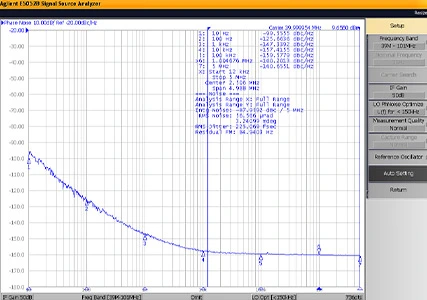
The phase noise profile defines how quiet your oscillator is at various frequency offsets. For most communication systems, look for:
-130 dBc/Hz at 10 Hz offset
-155 dBc/Hz at 10 kHz offset
These values ensure high purity signals suitable for demanding RF and timing applications.
Even minimal frequency drift can impact synchronization in high-speed systems. Choose TCXOs with ±0.1 ppm or better stability over the entire operating temperature range.
For outdoor or aerospace applications, ensure the TCXO maintains low phase noise across a wide range — typically -40°C to +85°C or more.
Ensure compatibility with your system’s voltage (e.g., 3.3V or 5V) and output format — such as CMOS, clipped sine, or sine wave — depending on your circuit requirements.
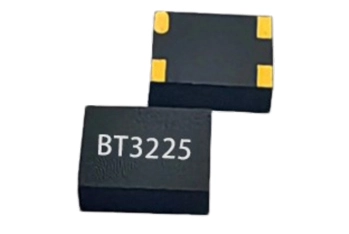
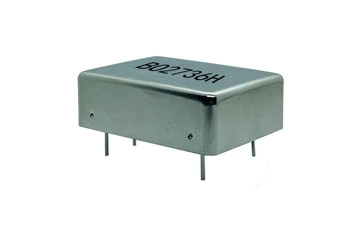
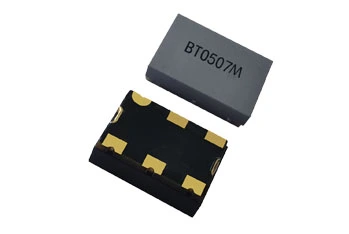
Compact SMD packages are ideal for dense designs like 5G transceivers or IoT modules. XtalTQ provides various form factors to balance performance with space constraints.
Aging determines long-term stability. For critical systems, select TCXOs with an aging rate below ±0.3 ppm/year.
| Feature | XTQ-ULN Series | XTQ-5G Series | XTQ-Aero Series |
|---|---|---|---|
| Phase Noise (10 Hz offset) | -130 dBc/Hz | -135 dBc/Hz | -140 dBc/Hz |
| Frequency Range | 10 – 100 MHz | 10 – 200 MHz | 10 – 150 MHz |
| Temp. Range | -40°C to +85°C | -40°C to +105°C | -55°C to +85°C |
| Output | CMOS/Sine | CMOS/Sine | CMOS |
| Typical Applications | RF testing, measurement | 5G, small cells, timing modules | Aerospace, satellite links |
All three XtalTQ series are built using precision-cut crystals and advanced temperature compensation algorithms, ensuring excellent spectral purity and long-term stability.
Ultra low phase noise TCXOs ensure accurate carrier generation and synchronization across thousands of small cells. XtalTQ’s TCXOs provide the phase stability needed for tight network timing requirements.
In satellite ground stations and navigation payloads, frequency accuracy is vital. XtalTQ’s aerospace-grade TCXOs maintain performance under vibration, radiation, and extreme temperature conditions.
Measurement instruments demand the lowest possible jitter for precision signal analysis. XtalTQ’s ultra low phase noise TCXOs deliver clean reference signals that improve testing repeatability and resolution.
At XtalTQ, we specialize in high-precision timing solutions tailored for advanced communication and measurement systems. Our ultra low phase noise TCXO lineup features:
Exceptional phase noise performance: down to -150 dBc/Hz
Outstanding stability: as tight as ±0.1 ppm
Custom frequencies and output options for specific design needs
Compact SMD packages for easy PCB integration
Rugged reliability, tested for vibration, temperature, and aging
With years of experience in crystal oscillator design and manufacturing, XtalTQ helps engineers achieve superior signal performance and consistency in every application.
Choosing the right ultra low phase noise TCXO is essential for ensuring communication system reliability and precision. By evaluating key factors such as phase noise, frequency stability, temperature range, and long-term aging, you can select the ideal oscillator that meets your system’s specific requirements.
XtalTQ offers a full range of ultra low phase noise TCXOs designed for 5G networks, radar systems, and satellite communication. Each product is crafted to deliver exceptional spectral purity and outstanding stability, empowering your systems to perform with absolute accuracy and confidence.
For more information or custom design support, visit www.xtaltq.com and discover how XtalTQ can enhance your next-generation communication systems.