English
 français
 Deutsch
 Español
 русский
A voltage-controlled crystal oscillator, or vcxo oscillator, is a precision component widely used in communication systems, test equipment, satellite navigation, and other advanced electronic applications. Unlike fixed-frequency oscillators, it allows fine frequency adjustments by applying a control voltage, which makes it indispensable in systems requiring synchronization and frequency stability. When selecting a vcxo oscillator, it is essential to understand its role as both a stable frequency source and a tunable element, ensuring that it provides flexibility without compromising on accuracy. The ability to maintain low phase noise and high stability under varying operational conditions highlights its importance in modern high-performance systems.

One of the most critical aspects when evaluating a vcxo oscillator is frequency stability, as it directly impacts the performance of the system in which it is embedded. In applications like telecom networks or instrumentation, even minimal frequency drift can lead to synchronization issues and degraded signal quality. Therefore, engineers often seek oscillators with exceptional short-term and long-term stability. The tuning range is equally significant, since the capacity to adjust frequency within a specified span determines the flexibility of the oscillator in practical use. A wider tuning range allows for greater adaptability, but it must be carefully balanced with stability requirements to ensure optimal performance in demanding applications.

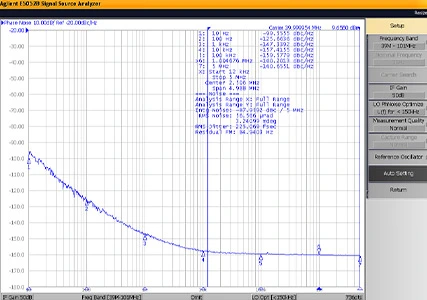
Phase noise is a decisive factor in differentiating between an average oscillator and a superior vcxo oscillator. In systems such as radar, satellite communications, and advanced measurement equipment, high phase noise can degrade overall system resolution and sensitivity. Engineers need to prioritize low phase noise specifications to ensure accurate signal processing and reliable communication. A vcxo oscillator designed with advanced manufacturing techniques and stringent quality control can achieve significantly lower noise levels, thereby supporting applications that require extremely clean and stable signals. In scenarios where every decibel of noise matters, careful consideration of phase noise characteristics becomes essential.

When selecting a vcxo oscillator, environmental stability plays a vital role in ensuring consistent performance across diverse conditions. Factors such as temperature fluctuations, vibration, and aging can influence the long-term reliability of oscillators. Devices used in aerospace, defense, or industrial environments often face extreme conditions, making it crucial to choose oscillators that can maintain frequency integrity under stress. A well-designed vcxo oscillator incorporates compensation mechanisms and robust construction to resist environmental impacts. This ensures that the oscillator can continue functioning with precision even in harsh conditions, contributing to the dependability of the entire system it supports.

Different industries impose varying demands on oscillators, and understanding these application-specific needs is fundamental to selecting the ideal vcxo oscillator. In high-speed data transmission, oscillators must provide precise timing alignment to reduce jitter and signal errors. In navigation and positioning systems, the emphasis may lie on long-term frequency stability to guarantee consistent accuracy. For test and measurement equipment, both low noise and high adjustability are often crucial. By carefully aligning oscillator specifications with the target application, engineers can ensure the chosen device maximizes efficiency and performance. Selecting a vcxo oscillator is therefore not a one-size-fits-all decision but rather a process of matching technical parameters with practical system requirements.